
EV Smart Tariffs for UK Drivers: How to Choose & Save with Octopus Energy
A practical, data-driven guide to choosing the best EV smart charging tariff from Octopus Energy — how it works, how much you can save, and how to switch via our referral link.
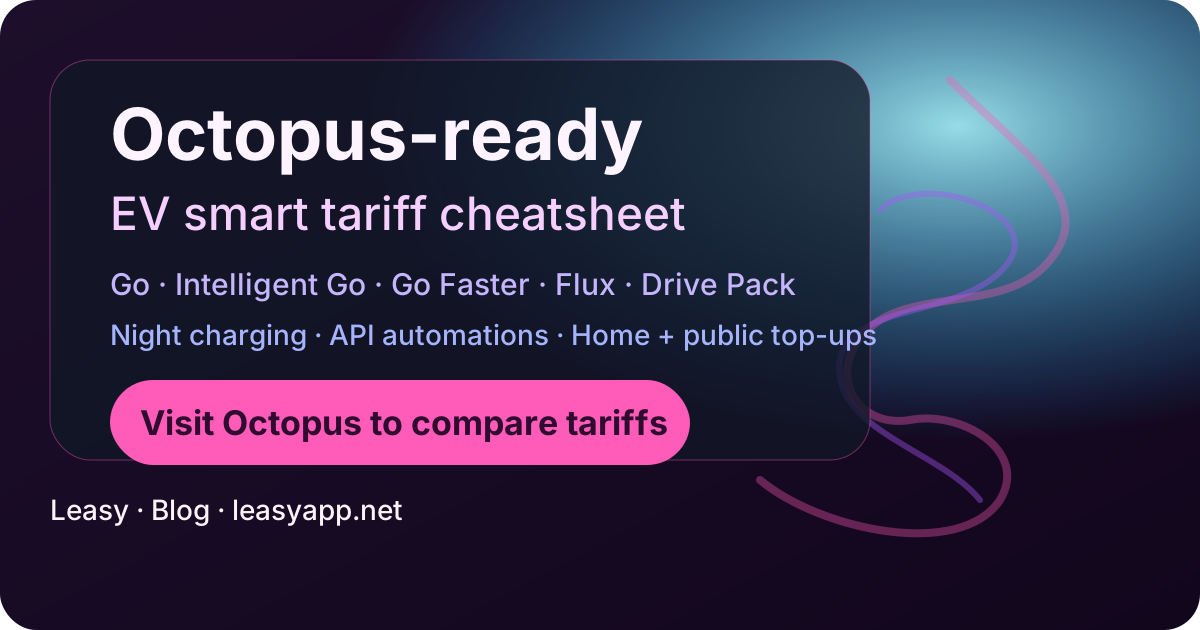
Quick summary
- Octopus Energy’s EV-specific tariffs enable overnight charging at as low as 7 p/kWh for the whole home, not just the car.
- With typical UK EV usage (≈ 7,000 miles/year) you could save £300+ annually compared to a standard variable tariff.
- Key decision factors: car/charger compatibility, overnight vs peak rates, whole-home usage, whether you have smart meter & controllable charger.
Why EV smart tariffs matter
If you drive an electric vehicle and charge at home, the cost of the electricity you use can vary dramatically depending on when you charge. Smart tariffs like those from Octopus are designed to reward you for charging when demand (and wholesale cost) is low — typically overnight — and therefore reduce your electricity cost and your carbon footprint.
For example:
- The Intelligent Octopus Go tariff offers off-peak charging at around 7 p/kWh, compared with the typical standard tariff rate around ~26 p/kWh (based on the UK price cap) — a potential ~70 % saving.
- Octopus states that an EV driver doing ~7,000 miles/year using their Smart EV tariff might save ~£315/year compared to standard usage.
- On-the-go (public charging) can cost ~51 p/kWh (September 2025) in some cases — so home smart charging at 7 p/kWh is a huge gap.
Understanding Octopus EV Smart Tariffs
Here are some of their key smart-tariff offers and how they work:
- Intelligent Octopus Go: Up to six hours of very low night-rate electricity (e.g., 23:30-05:30) for your home + smart EV charging at low rates.
- Octopus Go: Five hours of cheap electricity every night; compatible with all EVs/chargers (though less “smart” scheduling).
- Intelligent Drive Pack: Subscription model (~£30/month) for “unlimited smart charging” for one EV, added to your home tariff.
What to check / decide
- Do you have a compatible home charger & EV for “smart scheduling”? (Intelligent version needs that)
- Are you able/willing to charge mostly overnight when rates are lowest?
- Will you shift other big home loads (washing, heating, etc) into off-peak windows to maximise benefit?
- Do you already have a smart meter capable of half-hourly readings (required for many time-of-use tariffs)?
How much could you save?
- Using Octopus’s own calculator: an EV driver travelling ~7,000 miles/year could save £315 by switching to Intelligent Octopus Go versus standard tariff.
- They claim you can charge your EV for ~2.6p per mile under the Go tariff (depending on car efficiency) when using their 7 p/kWh off-peak rate.
- Compared with public charging (~51 p/kWh) the difference is large: home smart charging can cost ~86% less per kWh.
Example calculation:
If your EV uses ~0.3 kWh per mile (which is typical) and you pay 7 p/kWh:
0.3 kWh × 7 p = 2.1 p per mile.
At 7,000 miles/year → ~£147/year.
If standard rate ~26 p/kWh → 0.3 × 26 p = 7.8 p per mile → ~£546/year.
Saving ≈ £399/year. (Actual savings depend on car/charger/usage).
Step-by-step: How to switch & get the most from your tariff
Check eligibility
- Ensure you have a smart meter connected (SMETS2 preferred) and a home charger (or plan to install one).
- Verify your EV and charger are compatible if you’re going with the “Intelligent” tier.
Estimate your usage
- How many miles do you drive per year? How many kWh does your car use per mile?
- When do you normally charge (overnight / daytime / at work)?
Choose the best tariff for you
- If you charge mostly at night and have compatible equipment → Intelligent Octopus Go is likely best.
- If you simply want cheaper night charge and have a standard charger/EV → Octopus Go may suffice.
- If you drive heavily and want “unlimited smart charging” for one EV → consider the Drive Pack.
Switch & monitor
- Sign up via the referral link below.
- Download the Octopus app, set up smart charging schedule (if required).
- Track your EV mileage with Leasy to understand your driving patterns. Shift other high-usage items (washer, heating) into your cheaper timeframe if possible.
Review regularly
- Monitor your home and car-charging usage. If your pattern changes (e.g., you charge more often during daytime), consider switching to a different tariff.
- Check for any promotional offers (e.g., charger installation discount) from Octopus.
Ready to switch and start saving on your EV home charging?
Click here to join Octopus Energy’s EV smart tariff (via our referral link)
Potential drawbacks & things to watch
- If you charge during peak hours often (e.g., afternoon or evening) then off-peak tariffs lose their value.
- Some “smart” tariffs require you to plug in and let scheduling happen automatically — you may have less control over exactly when your car charges (but you still set the ready time).
- If your EV/charger setup is incompatible you may be forced onto a standard rate tariff. Tariff terms state they may move you to a different tariff if eligibility criteria are not met.
- Install cost of a suitable home charger (if you don’t already have one) adds upfront cost — though Octopus lists installations from ~£949.
Final thoughts
For UK EV drivers who charge at home and can mostly plug in overnight, a smart tariff from Octopus Energy represents one of the most straightforward ways to reduce your running cost. With rates as low as ~7 p/kWh and savings of several hundred pounds per year realistic, the value is clear.
Use the step-by-step guide above, check compatibility, sign up through the link below — and you’ll be well on your way to cheaper, smarter EV charging.
CTA: Start saving on your EV home charging today — switch to Octopus Energy’s EV smart tariff via our referral link. And track your EV mileage automatically with Leasy’s GPS mileage tracker — download free.